
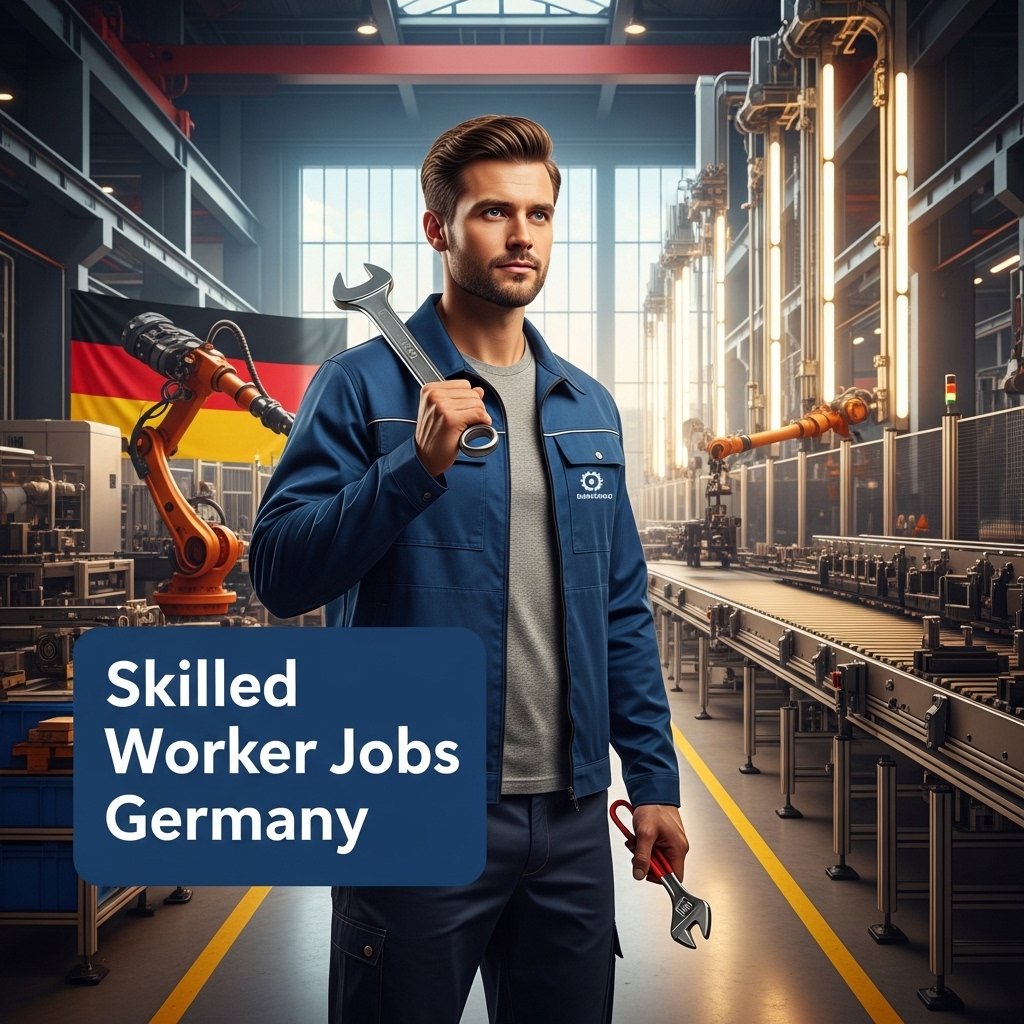
Germany continues to lead Europe’s industrial economy, and in 2026, the demand for skilled factory workers is stronger than ever. With its powerful manufacturing sector, advanced automation systems, and export-driven industries, Germany is actively recruiting international workers under legal employment programs.
For skilled professionals seeking work visa jobs in Europe, Germany offers competitive salaries, structured labor laws, and strong employee protections. Whether you specialize in machine operation, automotive assembly, food processing, metal fabrication, or electronics manufacturing, opportunities are expanding across the country.
This guide provides a complete breakdown of job roles, salary expectations, visa sponsorship details, legal requirements, and how to apply safely for skilled factory worker jobs in Germany in 2026.
Why Germany Needs Skilled Factory Workers in 2026
Germany faces a significant labor shortage due to:
- Aging population
- Skilled labor gaps in manufacturing
- Industrial expansion
- Increased exports in automotive and machinery sectors
Major industrial cities like Berlin, Hamburg, Munich, Frankfurt, Stuttgart, and Düsseldorf are actively recruiting foreign workers under skilled worker visa programs.
Germany’s “Fachkräftemangel” (skilled worker shortage) has opened doors for qualified candidates from Asia, the Middle East, and Africa through legal immigration channels.
Job Overview: Skilled Factory Worker Roles
Skilled factory jobs in Germany cover a wide range of industries.
Common Job Positions
- CNC Machine Operator
- Production Line Technician
- Automotive Assembly Worker
- Metal Fabrication Specialist
- Food Processing Technician
- Electrical Equipment Assembler
- Quality Control Inspector
- Warehouse & Logistics Operator
- Packaging Machine Operator
Many of these roles fall under Germany’s recognized skilled occupations list, making them eligible for work visa sponsorship jobs in Europe.
Industries Hiring in 2026
Germany’s strongest hiring sectors include:
1. Automotive Manufacturing
Companies like BMW, Mercedes-Benz, Volkswagen, and Audi require trained production workers and technicians.
2. Engineering & Machinery
Heavy equipment, robotics, and industrial machine production remain key sectors.
3. Food & Beverage Production
Food processing factories hire skilled packaging and production staff.
4. Electronics & Electrical Manufacturing
Assembly line technicians and electronics specialists are in demand.
5. Logistics & Export Warehousing
Germany’s export-based economy requires skilled warehouse operators.
Salary Expectations for Skilled Factory Workers in Germany
Germany offers competitive wages compared to many Gulf jobs salary packages.
Average Monthly Salary (2026)
- Entry-Level Skilled Worker: €2,200 – €2,800
- Experienced Technician: €2,800 – €3,800
- CNC & Technical Specialists: €3,500 – €4,500
Hourly Wage
- €14 – €25 per hour depending on experience
Additional benefits may include:
- Overtime pay
- Night shift allowances
- Holiday bonuses
- Social security coverage
- Health insurance
Compared to Gulf countries like the UAE or Saudi Arabia, Germany offers structured contracts, legal worker protections, and long-term residency options.
Work Visa Sponsorship in Germany (2026)
Germany offers multiple legal pathways for foreign workers.
Skilled Worker Visa (Fachkräfte Visa)
This visa allows qualified professionals to work legally in Germany if:
- You have recognized qualifications
- You receive a valid job offer
- Your employer provides a contract
EU Blue Card (For Higher Skilled Roles)
If your salary exceeds the annual threshold (approx. €45,000+), you may qualify for the EU Blue Card, which provides faster permanent residency options.
Germany Work Visa Process – Step-by-Step
Step 1: Secure a Job Offer
Apply through official portals or licensed international recruitment agencies.
Step 2: Qualification Recognition
Your diploma or technical certification must be recognized by German authorities.
Step 3: Employer Contract
Your employer must provide:
- Signed employment contract
- Salary details
- Work conditions
Step 4: Visa Application
Apply at the German Embassy in your country with:
- Valid passport
- Job contract
- Qualification certificates
- Proof of accommodation
- Health insurance
- Visa fee payment
Step 5: Residence Permit in Germany
After arrival, register your address and apply for a residence permit.
Processing time: 6–12 weeks.
Required Qualifications
To qualify for skilled factory worker jobs in Germany:
- Technical diploma or vocational training certificate
- 1–3 years of relevant experience
- Basic German language (A2 or B1 preferred)
- Clean criminal record
- Medical fitness certificate
Some employers may provide language training support.
Legal Requirements for Foreign Workers
Germany has strict labor laws to protect employees.
You must:
- Have a valid work visa
- Sign a legal employment contract
- Pay social security contributions
- Register residence within 14 days of arrival
Employers cannot legally charge recruitment fees for work visa sponsorship. If asked for large payments, it may indicate fraud.
Employee Benefits in Germany
Working legally in Germany offers strong protections.
Benefits Include:
- 20+ days paid annual leave
- Public health insurance
- Pension contributions
- Unemployment benefits
- Family reunification rights
- Pathway to permanent residency (after 4–5 years)
Germany also allows family members to join under dependent visas.
Comparison: Germany vs Gulf Countries for Skilled Workers
| Factor | Germany | Gulf Countries |
|---|---|---|
| Visa Sponsorship | Yes | Yes |
| Social Security | Strong system | Limited |
| Permanent Residency | Possible | Rare |
| Labor Laws | Highly regulated | Employer dependent |
| Salary | €2,500–€4,000 avg | Tax-free but variable |
Germany may offer slightly higher taxation, but long-term stability and residency options make it attractive.
How to Apply for Skilled Factory Worker Jobs in Germany
Trusted Job Portals
- Federal Employment Agency (Bundesagentur für Arbeit)
- EURES European Job Mobility Portal
- LinkedIn Jobs
- Indeed Germany
Through Recruitment Agencies
Ensure the agency:
- Is registered
- Does not charge illegal fees
- Provides written contract terms
Always verify employer details.
Important Tips to Avoid Job Scams
Job scams targeting international workers are increasing.
Protect Yourself:
- Never pay large upfront visa fees
- Verify company registration
- Confirm contract through official email domains
- Apply through embassy-approved channels
- Avoid offers without interviews
Germany’s immigration process is transparent and employer-driven.
Living Costs in Germany (2026 Estimate)
Average monthly expenses:
- Rent: €600 – €1,200
- Food: €250 – €400
- Transport: €70 – €120
- Utilities: €150 – €250
Cities like Berlin and Hamburg are moderately expensive, while smaller cities are more affordable.
Career Growth Opportunities
Skilled factory workers can upgrade their careers by:
- Taking advanced technical courses
- Improving German language proficiency
- Moving into supervisory roles
- Applying for EU Blue Card positions
Long-term employment may lead to permanent residency or even German citizenship.
Frequently Asked Questions (FAQs)
1. Can foreigners apply for skilled factory worker jobs in Germany in 2026?
Yes, if you have recognized qualifications and receive a valid job offer under Germany’s skilled worker visa program.
2. What is the minimum salary for work visa sponsorship in Germany?
Factory workers typically earn between €2,200 and €4,000 per month depending on skills and experience.
3. Is German language mandatory?
Basic German (A2/B1 level) is strongly recommended and may be required for visa approval.
4. How long does the Germany job visa process take?
Usually between 6–12 weeks after submitting complete documentation.
5. Can I bring my family on a skilled worker visa?
Yes, family reunification is allowed if income and accommodation requirements are met.
6. Are factory jobs in Germany permanent?
Most skilled factory roles offer long-term contracts with social security benefits.
Final Thoughts
Skilled factory worker jobs in Germany in 2026 present a powerful opportunity for international professionals seeking stable, high-paying, and legally sponsored employment in Europe. With structured labor laws, strong worker protections, and pathways to permanent residency, Germany stands out among sponsorship jobs in Europe.
If you have technical training, relevant experience, and a willingness to integrate into German work culture, this could be your gateway to a secure and prosperous future.
Apply through legal channels, verify every document, and focus on building your professional profile to succeed in Germany’s competitive industrial job market.